
 (800 x 560 px) (920 x 610 px) (920 x 610 px) (762 x 780 px) (762 x 780 px).png)
Why Transformation Fatigue is Real and W...

Is Your Leadership Style Holding You Back?
Home / Thought Leadership / Blog (800 x 560 px) (920 x 610 px) (920 x 610 px) (762 x 780 px).png)
Is Your Leadership Style Holding You Back?
This document explores how a leader's style can inadvertently hinder their effectiveness and the overall success of their team or organization. It delves into common leadership pitfalls, examines the importance of self-awareness and adaptability, and offers practical strategies for identifying and overcoming limiting leadership behaviors. By understanding the potential drawbacks of their approach, leaders can cultivate a more effective and empowering style that fosters growth, innovation, and high performance.
Identifying Limiting Leadership Styles
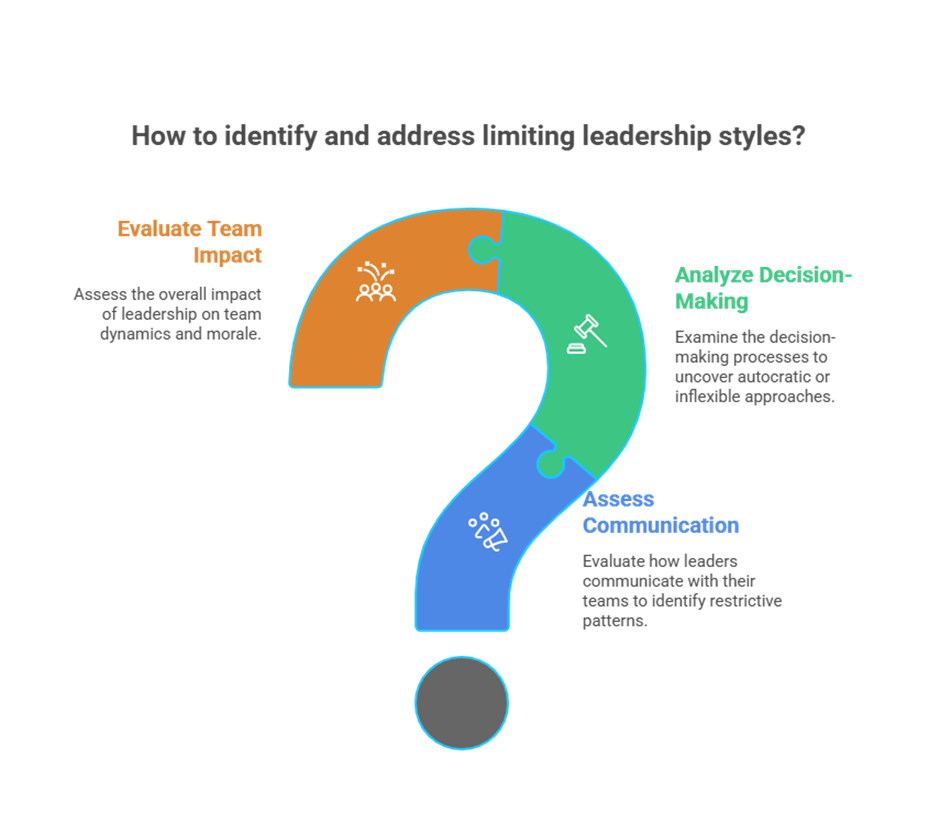
- The
Autocratic Leader: This leader makes decisions
unilaterally, with little to no input from their team. While decisiveness
can be valuable, an overly autocratic approach can stifle creativity,
demotivate employees, and lead to resentment. Team members may feel
undervalued and disengaged, resulting in decreased productivity and
innovation.
- The
Laissez-Faire Leader: At the opposite end of the
spectrum, the laissez-faire leader provides minimal guidance or direction.
While autonomy can be empowering, a lack of structure and support can lead
to confusion, inefficiency, and a lack of accountability. Team members may
feel lost and unsupported, resulting in missed deadlines and poor quality
work.
- The
Micromanaging Leader: This leader closely monitors
every aspect of their team's work, often interfering with tasks and
providing excessive direction. While attention to detail is important,
micromanagement can erode trust, stifle creativity, and create a sense of
constant scrutiny. Team members may feel suffocated and demoralized,
leading to decreased motivation and performance.
- The
People-Pleasing Leader: This leader
prioritizes being liked over making difficult decisions or providing
constructive feedback. While building positive relationships is important,
an excessive focus on pleasing everyone can lead to indecisiveness, a lack of
accountability, and a failure to address performance issues. Team members
may perceive this leader as weak and ineffective, leading to a lack of
respect and trust.
- The
Perfectionist Leader: This leader sets impossibly
high standards for themselves and their team, often focusing on minor
details and criticizing even minor imperfections. While striving for
excellence is admirable, an obsession with perfection can lead to stress,
burnout, and a fear of failure. Team members may feel overwhelmed and
discouraged, leading to decreased motivation and creativity.

Recent Posts

SAFe Meetup | Be Part of What’s Ne...
September 29, 2026
 (762 x 782 px) (762 x 782 px) (762 x 782 px) (762 x 782 px) (7).png)
What Makes Organizations AI-Native?
June 25, 2026
 (762 x 782 px) (762 x 782 px) (762 x 782 px) (762 x 782 px) (762 x 782 px) (762 x 782 px) (2).png)
Same AI. Different Roles. Different...
June 15, 2026
 (762 x 782 px) (762 x 782 px) (762 x 782 px) (762 x 782 px) (762 x 782 px) (762 x 782 px) (1).png)
AI Is Not One-Size-Fits-All: Why SP...
June 05, 2026
.png)
How Professionals Are Using AI—Toda...
June 01, 2026
 (762 x 782 px) (762 x 782 px) (762 x 782 px) (762 x 782 px) (762 x 782 px) (15).png)
Your Role Didn’t Change. Your Tools...
May 18, 2026




Take the next step in your career journey
Unlock your full potential with Gladwell's expert career Coaches.
Connect with us today and discover how we can help you grow.